
By Manuel Cuaron, Socals Best Insurance Services Inc
Understanding the intricacies of “commercial property ordinance or law coverage” is essential for landlords, particularly those managing multi-tenant buildings or properties requiring compliance with local regulations. This comprehensive guide breaks down the key components of ordinance coverage, specifically Coverage A, B, and C, highlighting their importance in protecting landlords from potential financial losses due to unexpected building code changes or property damages. Ordinance coverage plays a critical role in safeguarding against the risks associated with demolition, reconstruction, and loss of income. In this article, we’ll explore what ordinance coverage entails, the specific risks it addresses, and why it is indispensable for landlords. We will also delve into how each part of the coverage—A, B, and C—offers tailored protection for various scenarios, ensuring that landlords can make informed decisions regarding their insurance needs.
Executive Key Takeaways for Commercial Landlords
- Standard Ordinance or Law Exclusion: Typical commercial property insurance excludes costs related to building code upgrades and demolition beyond direct physical damage.
- Coverage A – Demolition Cost Coverage: Pays for demolition and rebuilding in compliance with current commercial property building code coverage after covered damage.
- Coverage B – Increased Cost of Construction: Covers additional expenses required to meet updated building ordinances during reconstruction or repairs.
- 50% Municipal Rule (Constructive Total Loss): If damage exceeds 50% of the building’s value, local codes often require full demolition and rebuild, increasing costs significantly.
- Lender and CMBS Compliance: Many Agency Lenders (Fannie Mae/Freddie Mac) and CMBS servicers mandate building ordinance endorsement coverage with defined limits to protect investments.
What Is Commercial Property Ordinance or Law Coverage?
Commercial property ordinance or law coverage commercial property insurance protects landlords from financial losses associated with changes in building codes and regulations that affect their properties. This insurance is crucial as it helps cover expenses arising from compliance with updated laws following incidents like fires, floods, or other disasters. It provides vital support in ensuring that landlords can rebuild or renovate properties in accordance with current codes, which may be more stringent than those that were applicable when the structure was initially built. The coverage addresses not only the physical restoration of the property but also the financial implications of adhering to new legislative requirements, embodying commercial property building code coverage that adapts to evolving municipal rules.
Which Building Code and Ordinance Risks Does This Insurance Address?
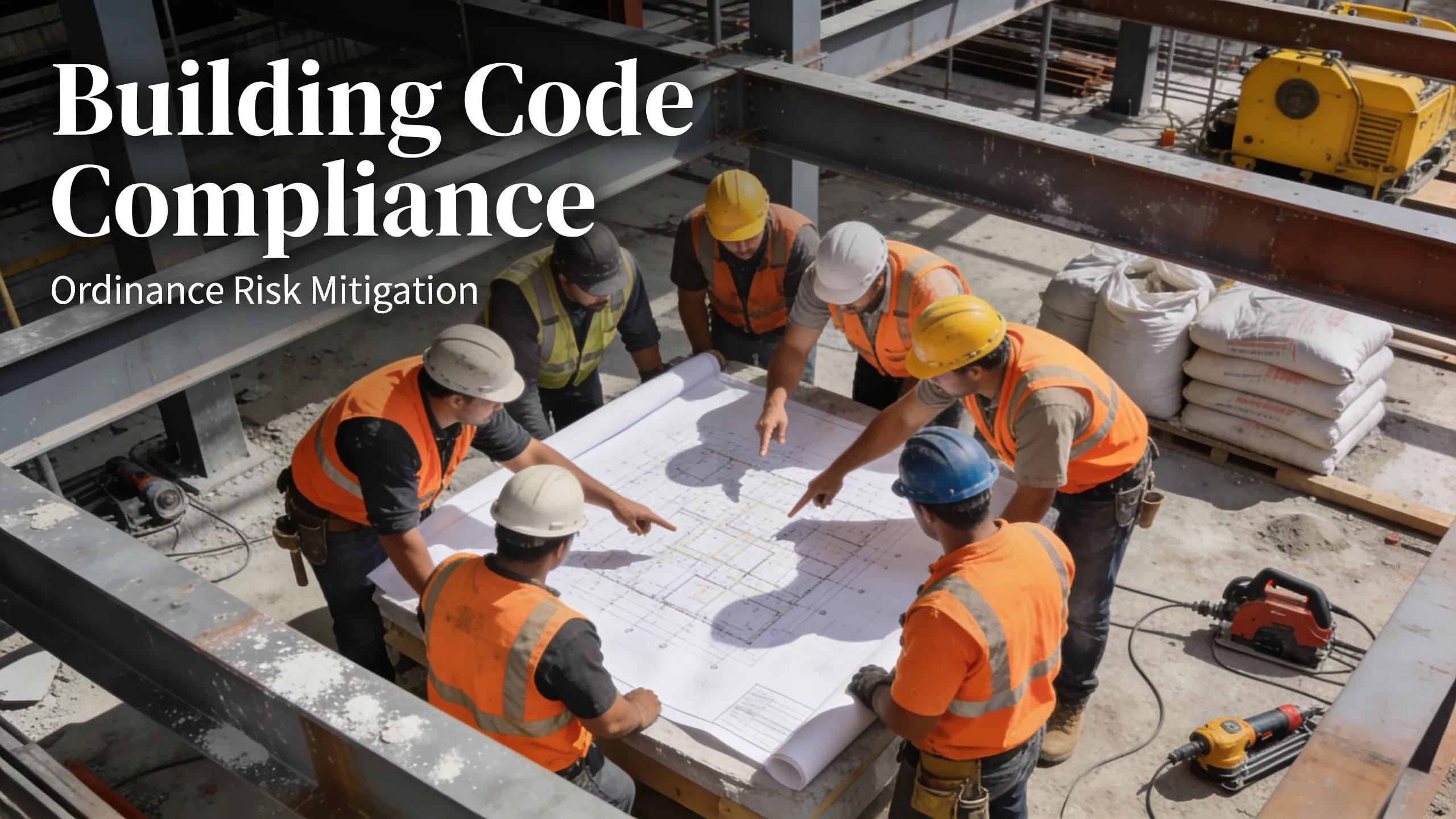
Landlords face various risks associated with building code upgrades and compliance when renovating or repairing their properties. Some of these risks include:
- Demolition Costs and Demolition Cost Coverage: If a property is damaged, landlords may be required to demolish existing structures and begin anew to meet current safety standards, which can be a significant out-of-pocket expense without ordinance or law coverage.
- Increased Cost of Construction: Following municipal code updates, repairs might require upgrades such as fire sprinklers, ADA compliance, and seismic retrofits, driving up costs significantly.
- Zoning Changes and Loss to Undamaged Portion: Changes in zoning laws could affect future development plans or the use of a property, potentially requiring demolition or reconstruction of even undamaged portions of the building, especially under loss to undamaged portion clauses.
Understanding these risks helps landlords pinpoint the necessity of ordinance coverage to mitigate financial losses.
Investing in commercial property insurance code upgrades and code compliance is often a smart financial decision, as studies demonstrate that the long-term savings from reduced losses far outweigh the initial costs of upgrades.
Building Code Compliance: Economic Benefits for Commercial Property Owners The FBC passes the BCA by a margin of $6 in full reduced loss to $1 of added cost, with a payback period of approximately 8 years. Economic effectiveness of implementing a statewide building code: The case of Florida, KM Simmons, 2018
Why Do Landlords Need Ordinance Coverage for Commercial Properties?
Landlords require ordinance coverage for various compelling reasons:
- Compliance with Local Laws: The ever-evolving nature of building codes means landlords must stay compliant to avoid legal repercussions and fines. Aging commercial buildings, typically 10-15+ years old or older, often face grandfathered building code vulnerabilities, making ordinance or law coverage commercial property insurance critical for ongoing compliance.
- Protection Against Financial Loss: Without adequate coverage, the financial burden of repairs, renovations, demolition cost coverage, or code upgrades may fall solely on the landlord’s shoulders, potentially resulting in severe financial strain.
- Mitigating Risks of Underinsurance: Many property owners are unaware of how underinsurance can expose them to significant financial risks. Ordinance coverage fills this critical gap by ensuring that property owners have adequate protection against unforeseen changes, including compliance with Agency Lender (Fannie Mae / Freddie Mac) and CMBS mandates, which frequently require specific building ordinance endorsement limits.
“CRE Insurance” specializes in providing tailored commercial property insurance solutions, enabling landlords to obtain comprehensive quotes for ordinance coverage and ensuring compliance with the latest building regulations.
Ordinance or Law Coverage Guide: Socals Best Insurance Services Inc
Coverage A, part of the building ordinance insurance coverage A B C suite, specifically addresses the costs associated with the demolition of structures and the reconstruction that adheres to current building codes. This coverage plays an integral role when properties must be restored or rebuilt after being damaged by insured perils. Landlords can find peace of mind knowing they won’t bear the financial burden of an unexpected demolition and the associated costs of construction and municipal code compliance, including the critical 50 percent rule building codes trigger.
What Expenses Are Included Under Coverage A for Commercial Properties?
Coverage A includes several key expenses that are often overlooked, such as:
- Demolition Costs: The cost incurred by removing structures that cannot be salvaged, often mandated under municipal code upgrades and triggered by local 50% rule building codes.
- Reconstruction Requirements: Expenses required to bring a property up to code during renovations or rebuilding, especially in aging structures.
- Compliance Costs: Additional financial outlays needed to ensure that new structures meet updated safety, ADA, fire sprinkler, electrical, and seismic building ordinance endorsements.
These expenses represent significant financial implications for landlords, which Coverage A directly addresses.
Can Coverage A Help with Multi-Tenant Property Demolition Costs?
For landlords managing multi-tenant properties, Coverage A is particularly beneficial. It allows them to cover costs associated with demolishing common areas or other shared spaces that may not comply with updated codes. This protection ensures that landlords can efficiently manage the complexities involved in maintaining and reconstructing multi-tenant buildings while safeguarding their investments.
What Are the Benefits of Coverage B: Increased Cost of Construction Insurance?
Coverage B addresses the increased cost of construction, particularly when upgrading to meet current building codes. This coverage is essential for landlords whose properties might require substantial renovations in the wake of an insurance claim.
How Does Coverage B Address Building Code Upgrade Requirements?
Coverage B effectively supports landlords by covering:
- Cost of Compliance: Financing the additional resources needed to ensure renovations and rebuilding meet current commercial property building code coverage and municipal ordinance or law requirements.
- Upgrading Materials: Covering enhanced materials that may be necessary to comply with newer safety, fire, ADA, and seismic standards.
This coverage fundamentally protects landlords from incurring substantial financial losses while ensuring their properties remain compliant with the law and lender requirements.
What Are Common Scenarios Where Coverage B Is Essential?
Landlords may find Coverage B indispensable in various scenarios, including:
- Natural Disasters: Properties damaged by floods or storms often require significant upgrades when being rebuilt.
- Zoning Changes: Adjustments in zoning laws may necessitate an entire redesign or additional improvements to renovations.
These scenarios illustrate the necessity of having comprehensive increases in “construction insurance” to effectively manage potential risks.
How Does Coverage C Compensate for Loss of Use or Business Income?

Coverage C is designed to compensate landlords for loss of use or business income resulting from damage to their commercial properties. This coverage provides critical financial assistance, enabling landlords to maintain cash flow even when tenants are affected by property damage.
What Types of Business Income Loss Does Coverage C Cover?
Coverage C protects against various business income losses, such as:
- Loss of Rental Income: If tenants cannot occupy a building due to damages, landlords can recover lost rent, ensuring their income is not disrupted.
- Business Interruption Scenarios: In cases where a business cannot operate due to renovation or construction, landlords can obtain compensation for this downtime.
- Additional Expenses: Coverage C may also provide for extra costs incurred during the recovery period, such as temporary relocation of tenants.
This coverage is essential for protecting the financial stability of landlords during challenging times.
Why Is Coverage C Critical for Landlords Managing Vacant or Multi-Tenant Buildings?
Coverage C is particularly important for those managing vacant or multi-tenant properties, as these landlords face unique risks. If a multi-tenant facility suffers damage, not only do landlords lose income from multiple tenants, but they may also encounter greater expenses related to reconstruction and compliance issues. By having adequate coverage, landlords can protect their investments and ensure business continuity during times of disruption.
Numerical Catastrophic Claim Scenario: The Impact of Ordinance or Law Coverage
Consider a $2,000,000 commercial building suffering $1,000,000 in fire damage, triggering the local 50% rule building codes that often require demolition of both damaged and undamaged portions due to building ordinance insurance code upgrades.
This case study clearly demonstrates the critical financial protection provided by a building ordinance endorsement and ordinance or law coverage commercial property insurance, eliminating significant financial gaps and ensuring landlord compliance with municipal building codes.
Special Considerations for Aging Commercial Buildings and Compliance with Agency Lenders & CMBS
Older commercial buildings, especially those 10-15+ years old, are often grandfathered under previous codes but face increasing risks and costs when damage triggers mandatory upgrades. Without proper ordinance coverage, landlords confront costly forced compliance, highlighting the importance of proactive insurance strategies.
Furthermore, Agency Lenders such as Fannie Mae and Freddie Mac, as well as Commercial Mortgage-Backed Securities (CMBS) servicers, frequently require landlords to maintain specific minimum limits in ordinance endorsement coverages to safeguard their investments. This includes compliance with the 50 percent rule building codes and code upgrade mandates during damage recoveries. Landlords should confirm coverage limits align with lender and servicer requirements for seamless loan and mortgage servicing.
Frequently Asked Questions
What is the difference between Coverage A, B, and C in commercial property ordinance or law coverage?
Coverage A pays for the demolition and rebuilding of a damaged structure to meet current building codes. Coverage B covers the increased cost of construction needed to bring a rebuilt property up to updated code requirements, such as fire sprinklers, ADA compliance, or seismic retrofits. Coverage C reimburses landlords for lost rental income or business interruption while the property is being repaired or rebuilt.
Why does standard commercial property insurance not cover building code upgrades?
A standard commercial property policy typically only pays to repair or rebuild a property to its condition before the loss, using like-kind materials. It excludes the added costs of complying with new building codes and generally does not cover demolition of undamaged portions of a building, which is why a separate ordinance or law endorsement is needed.
What is the 50% municipal rule and why does it matter for landlords?
Many municipalities require that if damage to a building exceeds 50% of its value, the entire structure — including undamaged portions — must be demolished and rebuilt to current code. This “50% rule” can dramatically increase demolition and reconstruction costs, which is exactly what Coverage A and Coverage B are designed to address.
Do lenders require ordinance or law coverage on commercial properties?
Yes. Agency Lenders such as Fannie Mae and Freddie Mac, along with CMBS servicers, frequently require landlords to carry ordinance or law coverage with defined minimum limits as a condition of the loan, since unaddressed code-upgrade costs can put their collateral at risk.
Is ordinance or law coverage especially important for older commercial buildings?
Yes. Buildings that are 10-15 years old or older are often grandfathered under older codes, meaning a covered loss can trigger costly mandatory upgrades to bring the property into compliance with current safety, fire, ADA, and seismic standards. Ordinance or law coverage helps landlords avoid absorbing those forced compliance costs out of pocket.