

By Manuel Cuaron, Socals Best Insurance Services Inc
Understanding the differences between Replacement Cost Value (RCV) and Actual Cash Value (ACV) is crucial for anyone navigating commercial property insurance. As real estate investments are often significant, ensuring proper coverage can prevent substantial financial losses. This comprehensive guide to RCV vs ACV insurance provides insights into these valuation methods, emphasizing their importance for landlords and commercial building owners. The choice between RCV and ACV will significantly impact both how claims are prepared and the ultimate payout in the event of a loss. In the following sections, we will explore definitions, key differences, and implications for coverage decisions, alongside detailed analysis of each method’s benefits and limitations.
Valuation Methods in Commercial Property Insurance: RCV vs. ACV
Commercial property insurance valuation relies on two primary methods: Replacement Cost Value (RCV) and Actual Cash Value (ACV). Both strategies offer specific advantages and disadvantages that can influence a property owner’s decision about their insurance coverage. RCV refers to the amount required to replace or repair the damaged property without deducting for depreciation. In contrast, ACV considers depreciation, providing a payout that reflects the current market value of the property.
It is important for owners to recognize that the specifics of these contract terms dictate the financial reality of a recovery process.
Understanding Actual Cash Value in Property Insurance Contracts Otherwise coverage is for the actual cash value specified in the contract, which might be less than the replacement cost. Introduction to ratemaking and loss reserving for property and casualty insurance, 2007
Definitions
Replacement Cost Value (RCV) is defined as the cost to replace a damaged asset without accounting for depreciation. This means that if a building is destroyed, the insurance company would provide funds sufficient to reconstruct or repair it based on current costs. On the other hand, Actual Cash Value (ACV) is determined by taking the Replacement Cost Value and subtracting depreciation, reflecting what the property is worth at the time of the loss. This can lead to a lower payout as it accounts for wear and tear.
Key Differences
The primary differences between RCV and ACV come down to payout calculations, financial implications, and policy specifics. RCV payouts are generally higher than ACV payouts because they do not reduce for depreciation. Thus, when a claim is processed, property owners may receive a more substantial amount under RCV. Conversely, ACV can be significantly lower, impacting the funds available for recovery after a loss.
Understanding these distinctions is crucial for property owners as they explore coverage options tailored to their needs. Deciding on the appropriate valuation method will depend on individual risk tolerance, property age, and specific financial situations.
Ready to protect your commercial property? Get a fast, no-obligation quote tailored to your building’s valuation needs — Get Your Quote.
What Is Replacement Cost Value in Commercial Property Insurance?
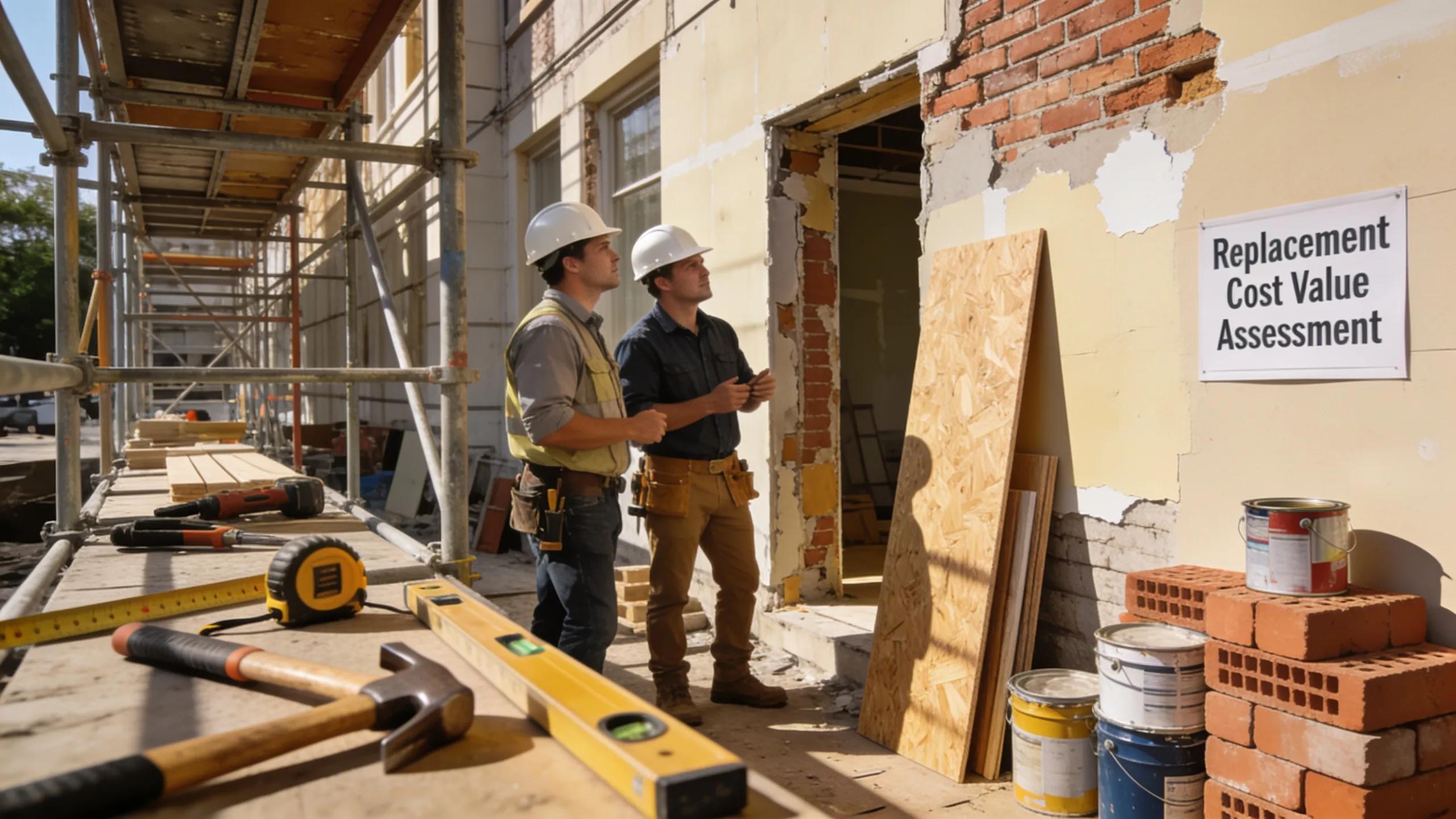
Replacement Cost Value (RCV) is essential for property owners seeking comprehensive coverage for their real estate investments. This valuation method ensures that, in the event of a loss, the property can be restored to its original condition without financial loss due to depreciation. This approach means that, after a covered loss, an insurance claim would provide funds adequate to replace the damaged property with materials of like kind and quality.
How Is Replacement Cost Value Calculated and Applied?
Calculating Replacement Cost Value involves assessing the total cost required to replace the property with a similar structure or item, using current prices for materials and labor. Property owners and insurers may refer to construction cost calculators or industry guidelines to determine RCV. For example, if a building with an RCV of $1 million were to suffer complete destruction, the insurance company would provide funds to cover the costs of rebuilding it based on current market rates.
RCV vs. ACV: A Guide by Socals Best Insurance Services Inc
Replacement Cost Value coverage has several benefits. First, it offers peace of mind to property owners, knowing they can rebuild without incurring additional costs. Second, RCV often leads to higher itemized claim payouts, which can facilitate quicker recovery and restoration. However, limitations include potentially higher premiums compared to ACV policies and the requirement to justify the full costs during claims.
How Does Actual Cash Value Affect Commercial Property Insurance Coverage?
Actual Cash Value (ACV) affects coverage by providing a payout that might not fully cover the replacement costs, primarily because it considers depreciation. This means that if an older property experiences a loss, the insured may receive significantly less than the amount needed for a complete rebuilding. This valuation method impacts financial planning for property owners, as they must consider potential out-of-pocket expenses in the event of a claim.
What Is the Formula for Calculating Actual Cash Value for Commercial Properties?
The formula for calculating Actual Cash Value is straightforward:
This calculation means that, for instance, if a property has a replacement cost of $500,000 and carries a depreciation of $150,000, the Actual Cash Value would be $350,000. This figure reflects what the property is worth at the time of loss, potentially limiting recovery funds for the owner.
What Are the Advantages and Limitations of Actual Cash Value Insurance Policies?
Actual Cash Value insurance policies offer several advantages, such as lower premiums compared to RCV policies and straightforward claim processes, as it is easier to assess depreciation values. However, the limitations are significant; namely, property owners may find themselves underinsured should a total loss occur, as the payouts are often insufficient to cover full replacement costs.
What Is the Difference Between Replacement Cost Value and Actual Cash Value for Commercial Insurance Claims?
The critical difference between Replacement Cost Value and Actual Cash Value in commercial insurance claims lies in how the payout is calculated. RCV claims assure full restoration without depreciation, while ACV claims may leave insurance holders with less money after a loss due to the subtracted depreciation.
How Do RCV and ACV Compare in Insurance Claim Settlements?
In insurance claim settlements, the choice between RCV and ACV typically affects the amount property owners recover after a loss. RCV generally offers a higher settlement amount, allowing for complete restoration of the property, whereas ACV might only cover a fraction, depending on how much the asset has depreciated over time. This factor is crucial for landlords and commercial property owners to understand prior to choosing a policy.
Which Valuation Method Is Better for Multi-Tenant, Vacant, and Cannabis Industry Properties?
Selecting between RCV and ACV often depends on property type. Multi-tenant properties typically benefit from RCV due to their potential for substantial damage and repair costs, thus justifying higher premiums. For vacant property insurance valuation, the choice may lean toward ACV due to lower overall maintenance costs. Similarly, cannabis property insurance coverage may require RCV for compliance and assurance of full restoration capabilities, given the investment in such licenses and facilities.
Professional risk assessment is essential because different asset classes are governed by unique insurance valuation frameworks.
Commercial Property Valuation Methods and Insurance Models Note that commercial and industrial properties as well as residential properties are often subject to different insurance valuation and loss assessment models. Insurance and reinsurance models for earthquake, 2014
How Does Insurance Valuation Impact the Commercial Property Claims Process?
Insurance valuation significantly impacts the claims process by determining how much coverage is available in the event of a property loss. A greater understanding of RCV and ACV will guide property owners in selecting the most appropriate insurance for their needs, thus influencing their claims experience.
What Are the Step-by-Step Procedures for Claims Based on RCV and ACV?
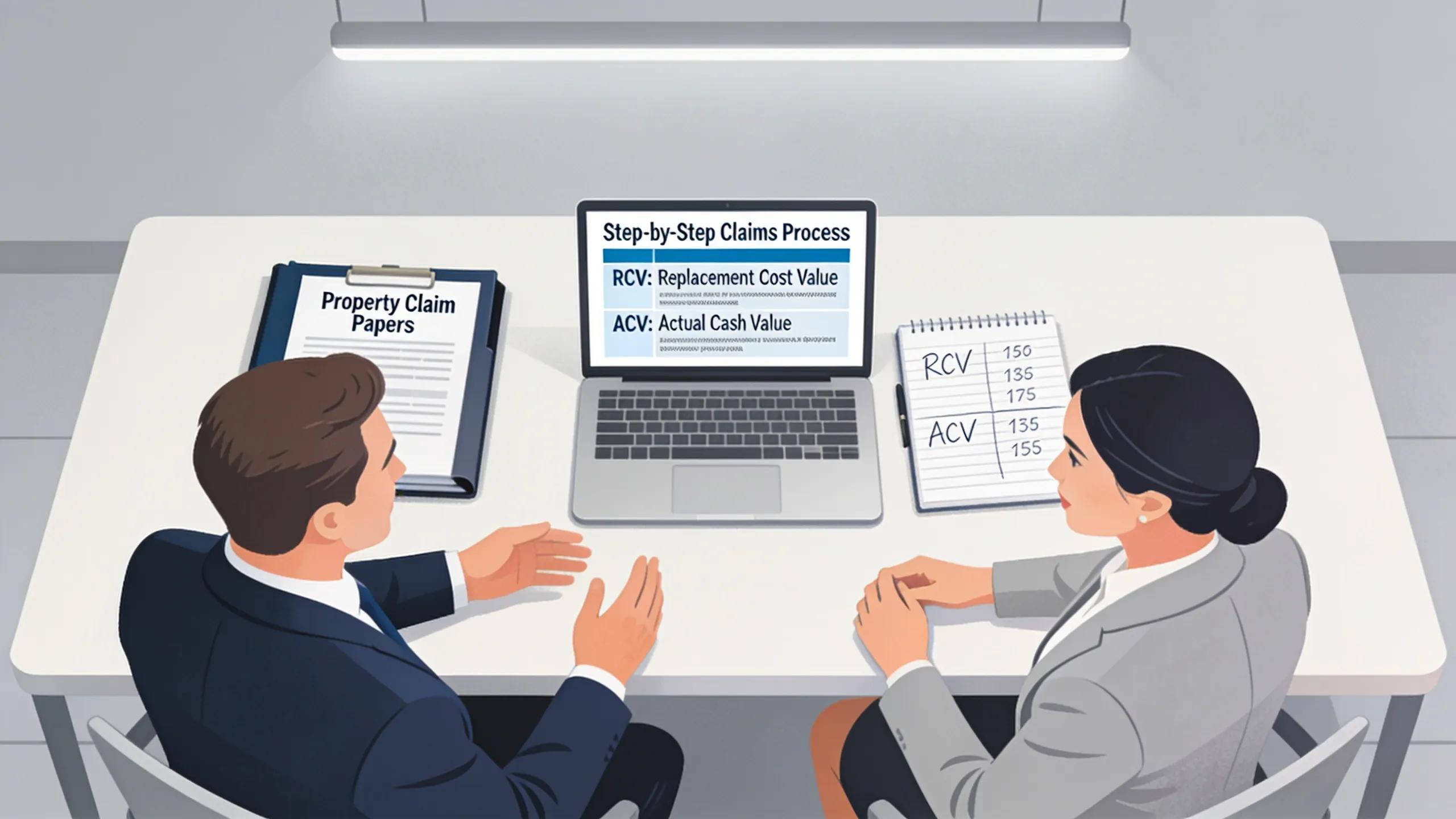
Filing claims based on RCV or ACV generally follows these steps:
- Report the Loss: Notify the insurance company promptly.
- Document Damage: Provide thorough documentation of the property’s condition before and after the loss.
- Assessment: The insurer assesses the claim, determining whether it qualifies for RCV or ACV.
- Claim Settlement: Depending on the valuation method, the payout is calculated, and an offer is made to the owner.
This structured approach ensures that property owners are adequately compensated for their losses, whether insured under RCV or ACV policies.
How Does Depreciation Affect Claim Payouts Under Actual Cash Value Policies?
Depreciation plays a significant role in determining payouts under Actual Cash Value policies. As properties age or suffer wear and tear, their market value decreases, resulting in lower payouts. This aspect highlights the importance for property owners to have a solid understanding of both their property’s value and depreciation trends when buying insurance to avoid being underinsured after a loss.
In cases of catastrophic loss, the gap between policy limits and actual replacement costs can prove devastating to business operations.
Commercial Property Insurance: RCV vs. Fixed Sum Insured claims for successive earthquakes which in aggregate exceeded the fixed sum insured and even the full replacement cost of the buildings. Understanding post-earthquake decisions on multi-storey concrete buildings in Christchurch, New Zealand, 2017
Frequently Asked Questions
What is the main difference between Replacement Cost Value (RCV) and Actual Cash Value (ACV)?
RCV pays out the full cost to replace or repair damaged property using current material and labor prices, with no deduction for depreciation. ACV starts from that replacement cost but subtracts depreciation for the property’s age and wear, resulting in a lower payout at the time of loss.
Is RCV or ACV coverage more expensive?
RCV coverage typically carries higher premiums because it guarantees a larger payout with no depreciation deducted. ACV policies usually cost less upfront, but that savings comes with the risk of a smaller settlement if a major loss occurs.
Which valuation method is better for vacant commercial properties?
Vacant properties often lean toward ACV coverage because of their lower ongoing maintenance and reduced exposure compared to occupied buildings, though the right choice still depends on the property’s condition, age, and the owner’s risk tolerance.
Why might cannabis property owners need RCV coverage specifically?
Cannabis facilities often represent significant investment in specialized buildout, equipment, and licensing. RCV coverage helps ensure funds are available to fully restore the property and its improvements after a covered loss, without a depreciation deduction reducing the payout.
How is Actual Cash Value calculated on a commercial property claim?
ACV is calculated by taking the property’s replacement cost and subtracting depreciation. For example, a property with a $500,000 replacement cost and $150,000 in depreciation would have an Actual Cash Value of $350,000 at the time of loss.
Have questions about RCV or ACV coverage for your property? Get a personalized quote today and make sure your commercial property is properly protected — Get Your Quote.